
You Apply Portfolio Theory to Your Investments. Why Not to Your Income?
By Julia Stefani · Founder, Swolta Ventures
You diversify your investments. You manage risk. You'd never put 100% of your money into a single stock and call it a strategy.
So why do we do exactly that with our income?
One employer. One salary. One performance review. One person's opinion of your work determining your raise, your trajectory, your entire financial life.
That is maximum concentration risk. And most of us have been taught to call it stability.
It's not stability. It's dependency.
What Portfolio Theory Actually Is
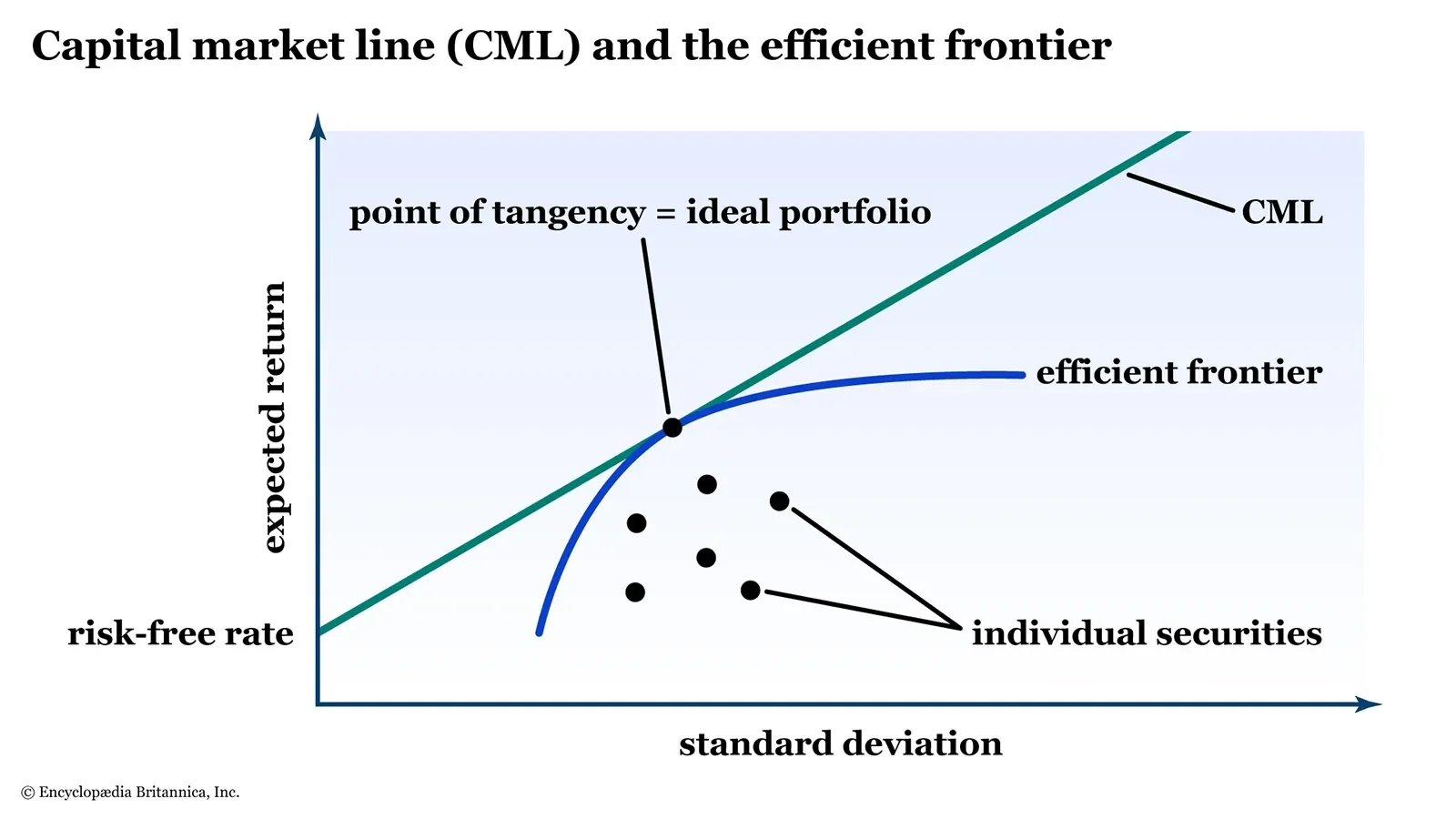
In investing, portfolio theory is a simple idea: don't put all your eggs in one basket. Spread your money across different types of assets — stocks, bonds, real estate, cash — so that when one drops, others hold steady or grow. The goal isn't to pick the single best investment. The goal is to build a mix that performs well together, across different conditions, over time. Diversification isn't about hedging against disaster. It's about designing for resilience.
That's the lens I started applying to my income. And it changed everything.
The Calculation Nobody Teaches You
I spent most of my career with 100% of my income tied to one company. I had a good title, a good salary, good benefits. On paper, I was doing everything right.
But when I started questioning what I was optimizing for — when motherhood and a pandemic cracked open the assumptions I'd been operating under — the first thing I noticed was how trapped that structure made me feel.
Every decision ran through the same filter: can I afford to lose this job?
Not "is this the right work for me?" Not "does this align with the life I'm building?" Not "is this the best use of my time and skills?"
Just: can I afford to lose this?
That's not a career strategy. That's risk concentration dressed up as professional loyalty.
If a financial advisor structured your investment portfolio this way — 100% in a single asset, no diversification, no hedge, no optionality — you'd fire them. You'd call it reckless.
But we've been trained to accept exactly this arrangement with the thing that matters even more than our investments: our ability to earn a living.
The 65% Rule
Here's the rule I operate by now: no single income source should represent more than 65% of my total income.
That's it. One constraint. One number.
The number itself is less important than the discipline it creates. You might choose 70%. You might choose 50%. The point is that the moment you set a ceiling, you start designing toward it. You start asking questions you never asked before.
Questions like: what am I good at that someone would pay for independent of my employer? What could I build that isn't tethered to my hours? What does my income look like if I lose my biggest client tomorrow — do I have a floor, or do I have a cliff?
Those questions changed how I think about work entirely.
What a Portfolio Actually Looks Like
Right now my income breaks down roughly like this: 60% consulting and fractional CPO work, 20% short-term rental property, 20% e-commerce.
These weren't chosen randomly. Each stream was evaluated against three properties that I think matter more than most people realize.
The first is time-tethered — how tied is this income to my physical hours? Consulting is highly time-tethered. I trade hours for revenue. E-commerce is the opposite. The work is front-loaded — building the product, setting up the systems — and then it runs whether I'm at my desk or not.
The second is volume control — how much can I dial this up or down? Consulting is variable by design. I can take on more clients or fewer clients depending on the season of life I'm in. A rental property doesn't have a volume dial — it produces what it produces. That predictability is part of its value.
The third is beyond cash — what does this income stream do for me beyond generating revenue? My rental property produces yield, but it also creates a tax offset on my active consulting income. Every consulting client I take on opens three more doors — to referrals, to industries, to problems I haven't seen before. E-commerce taught me operations and logistics, skills I now use in my advisory work.
Design for diversity across all three properties. The goal isn't three income streams that look the same. The goal is three streams that behave differently from each other — so that when one is down, another is steady, and a third is growing.
The Shift Underneath
I want to be honest about something: this isn't easy. Building a portfolio career takes time, takes risk tolerance, and takes a willingness to be bad at new things while you're still good at your main thing.
I didn't quit my job one day and wake up diversified the next. It took years. I started my e-commerce business while still employed full-time. I bought the rental property before I went fractional. I built each stream incrementally, testing whether it worked before depending on it.
The leap wasn't one leap. It was a series of small experiments that eventually added up to enough confidence — and enough income — to make the full transition.
But here's what I want you to hear: you don't have to quit your job to start thinking this way.
You can start with one question: what percentage of my income comes from a single source right now? If the answer is 100%, you don't have a diversification problem yet. You have an awareness that most people never get to.
The second question: what do I know how to do that someone would pay for outside of my current employer? Not a side hustle. Not a hobby. A genuine, market-ready skill that has value independent of your job title.
Those two questions — what's my concentration risk, and what's my independent value — are the beginning of a portfolio mindset. You can ask them tonight. You can start designing toward a different answer this month.
From Dependency to Optionality
The real product of a portfolio career isn't the money. It's what happens to your decision-making when no single client or employer holds the keys to your financial life.
You negotiate differently. You say no differently. You take on work because it aligns with what you're building, not because you can't afford to turn it down.
You decide from optionality, not dependency.
That shift — from dependency to optionality — is available to anyone willing to design for it. You don't need to have my specific portfolio. You don't need to be a fractional CPO or own rental property or run an e-commerce business.
You need a number. A ceiling. A constraint that forces you to start seeing your career as a portfolio instead of a position.
Pick your number. Make it a constraint. Design toward it deliberately.
This is the second in a series I'm writing about designing portfolio careers. Read the first: The Ambition Gap Is a Design Gap
Julia Stefani is the founder of Swolta Ventures, a fractional Chief Product Officer and strategic advisor to fintech, AI, and healthtech startups, and an executive coach helping women design portfolio careers.
